
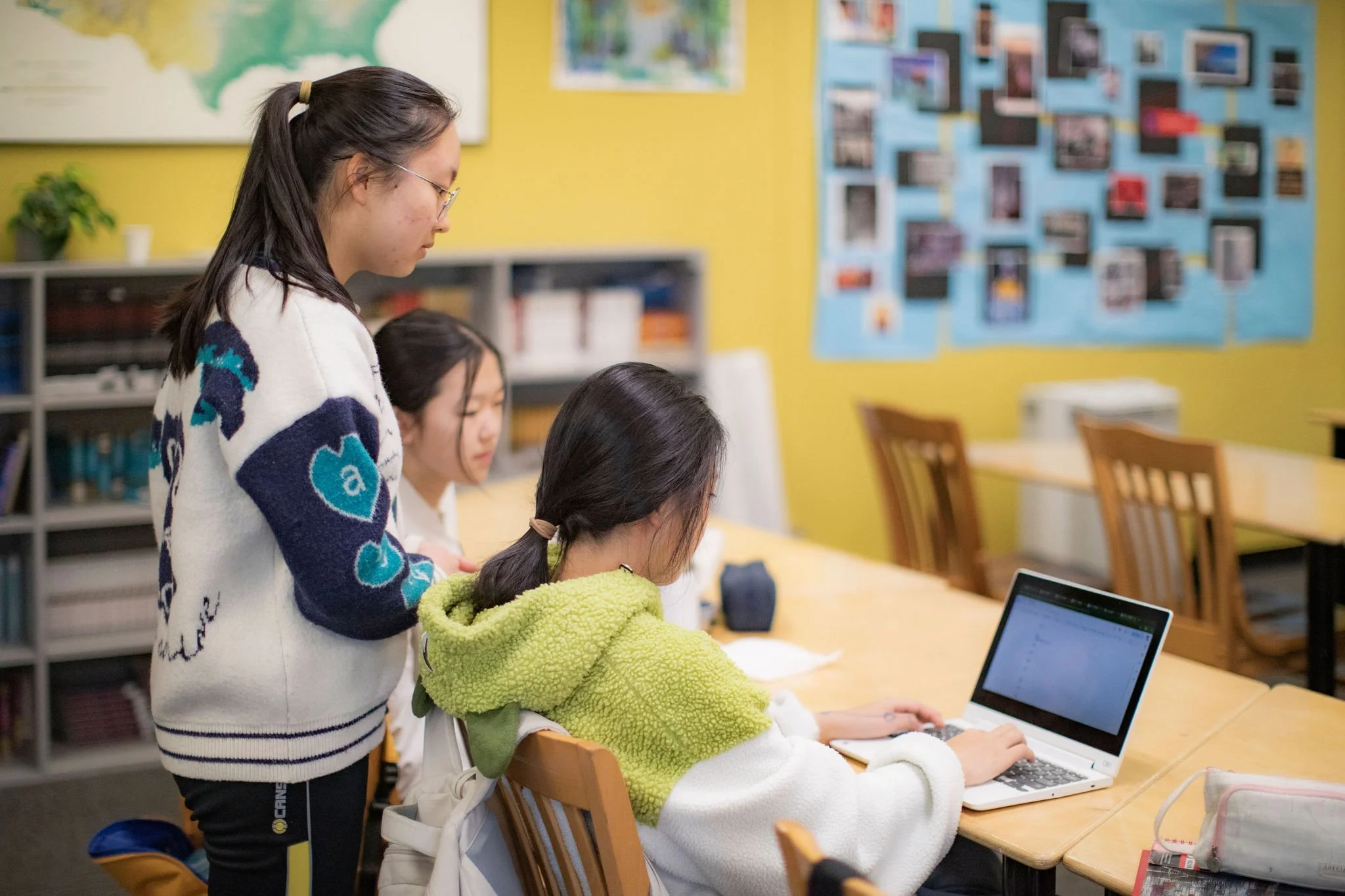
Media & Technology

Waldorf Education is well-known for little-to-no-use of technology in classrooms. In addition, at PWS, we are a cell-phone free zone campus. What does this look human-centered, nature-focused education look like in practice? Below you will find more information about our approach, our technology policy, and our agreements with our families and students.
Technology in the Grades
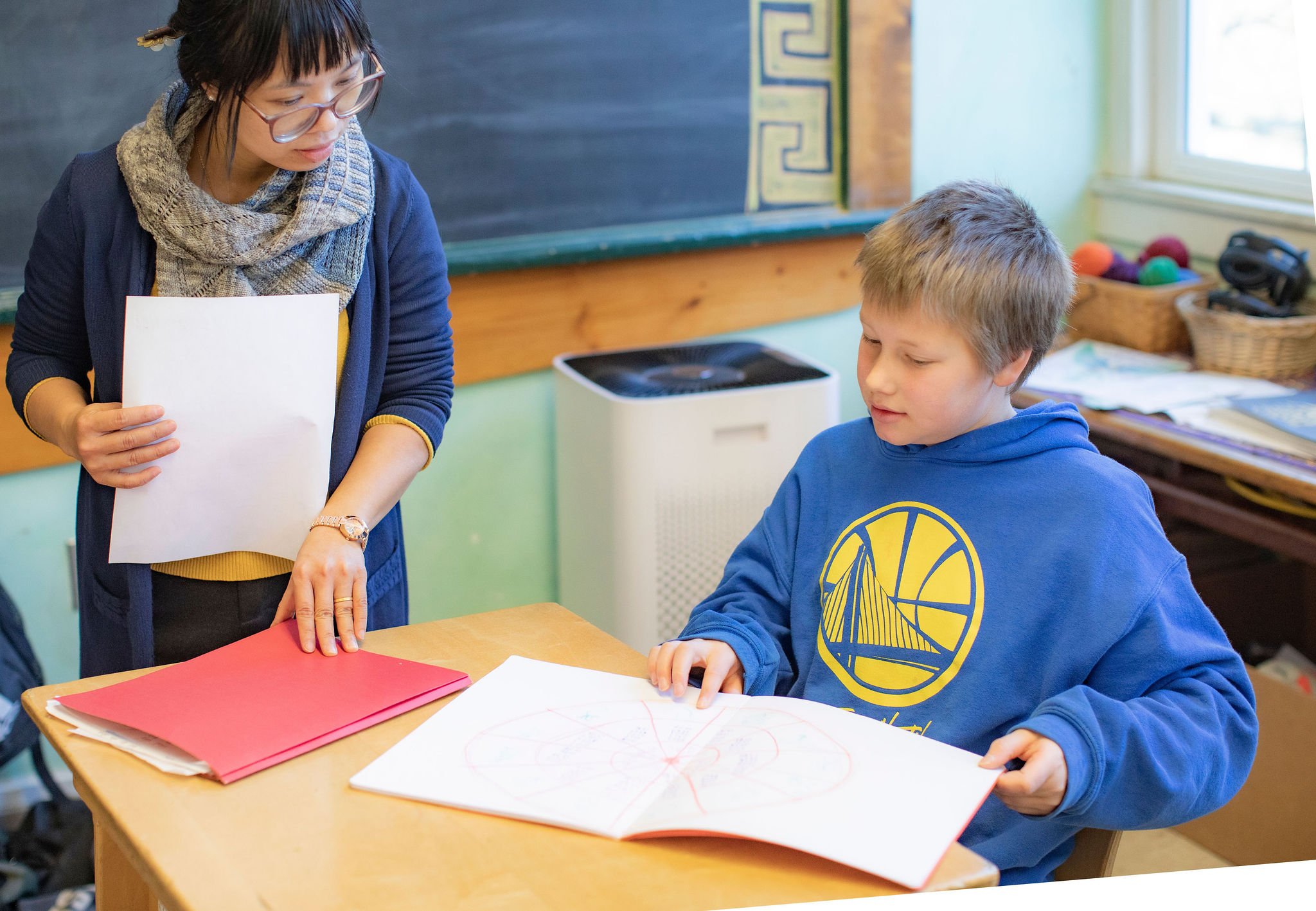
Simply put, PWS does not use any electronic devices in our grades classrooms. That is, until, middle school when we first introduce our Cyber Civics curriculum in Grade 7 and require a typed essay in Grade 8 for their final projects.
Middle school teachers may also introduce computer research skills when it is appropriate. This later introduction to media use illustrates a modern way in which we are developmentally aligned.
In addition, depending on the class teacher and family environment, some classes may choose to sign “Wait Until Eighth” contracts, in which families in a particular class mutually agree to phone cell phones or laptops until Grade 8 or after.
Lastly, we ask that all families review our Technology Policy in Parent Handbooks before the start of every school year.
In 2024, we partnered with Cedarwood Waldorf School on an article about our approach. Read the article below.
A Cell-Phone Free Campus
While cell phones are allowed on campus, we ask that all teachers, administrators and adult parents and caregivers keep them stowed in pockets or bags and use them sparingly outside. We offer the front office or other rooms as places to use phones. High school students may bring devices on campus, but they are stored away in lockers for the entire day, even during breaks, and used only for specific, approved reasons. Here, students, teachers and staff stay engaged with each other, while the adults on campus model limited cell phone use.
Technology in High School
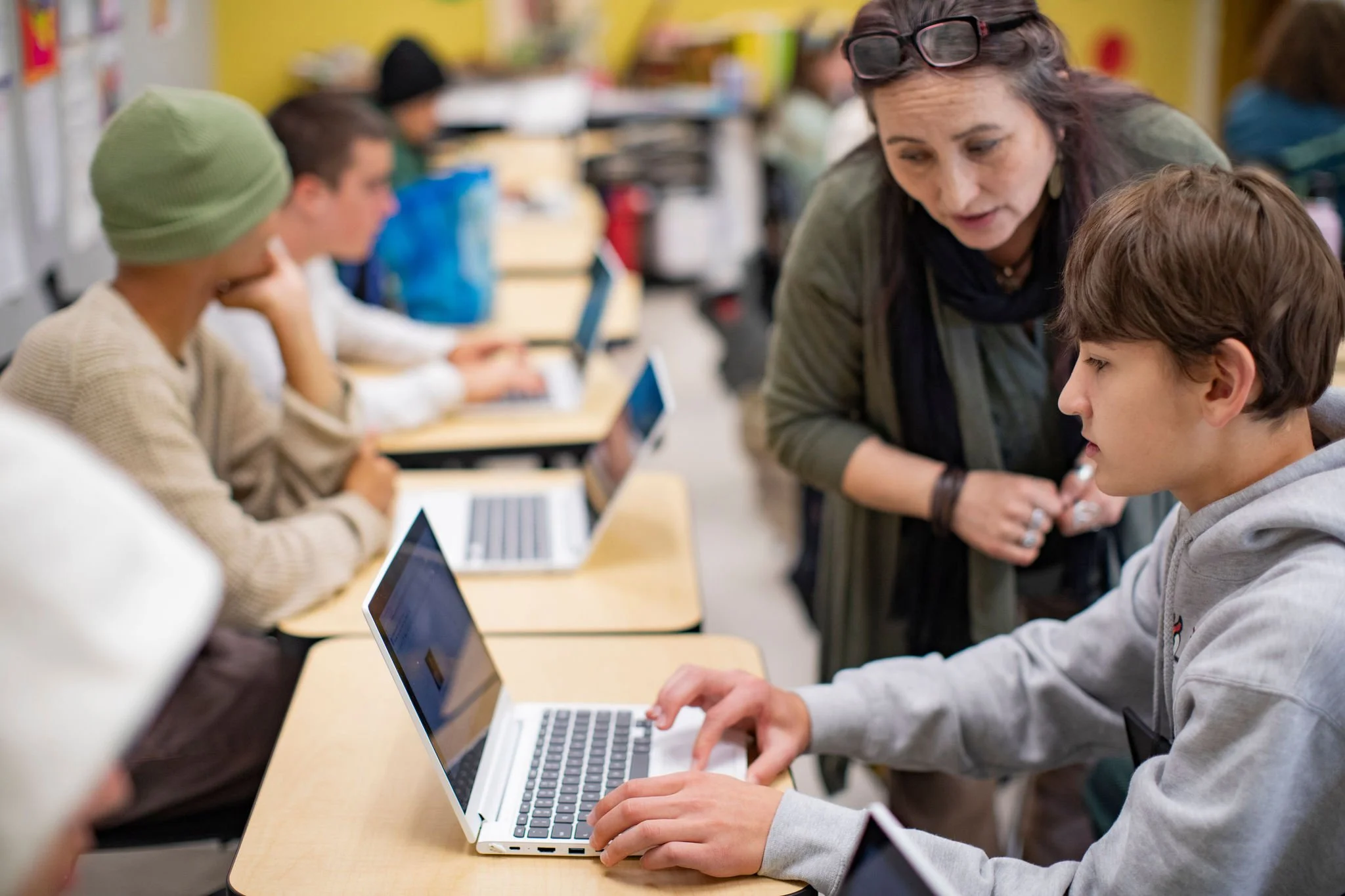
Technology, like daily access to laptops and instructional presentations, is used as a tool to help students achieve their specific goals purposefully. As students’ unique talents and ideas take shape, intentional use allows for more experiential learning, imaginative thinking and human connection.
Here, high school students stay engaged with their learning and connect with their teachers and each other, as they do the important work of becoming who they are and preparing for their futures.
In 2024, we partnered with Cedarwood Waldorf School on an article about our approach. Read the article below.