Taught by Humans, Not Screens
“Consumer tech giants provide the essential scaffolding that schools run on,” writes journalist Natasha Singer in the New York Times. ”Some of these companies, including Google, Microsoft and Apple, have also used their status as classroom tech providers as a springboard to influence how and what schoolchildren learn.”
Singer, author of the book “Coding Kids: Big Tech’s Battle to Remake Public Schools,” has spent years examining the ways that technology moved into mainstream education, dramatically altering both the classroom experience and the curriculum for students as young as kindergarten. Amid these changes, many educators and advocates worry that the rise of educational technology and screen-based learning has sidelined the real-world relationships and hands-on experiences that are at the heart of an effective education
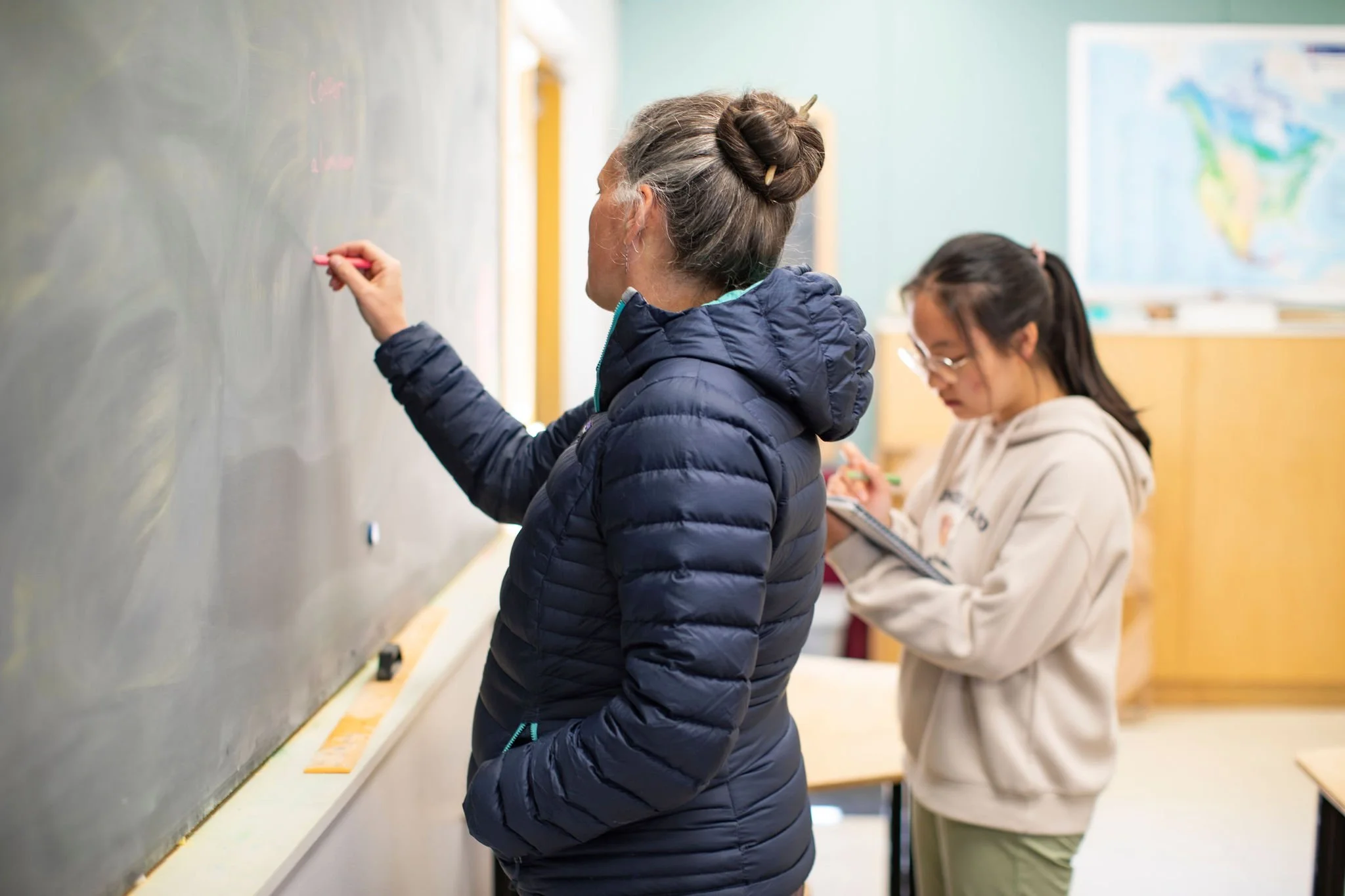
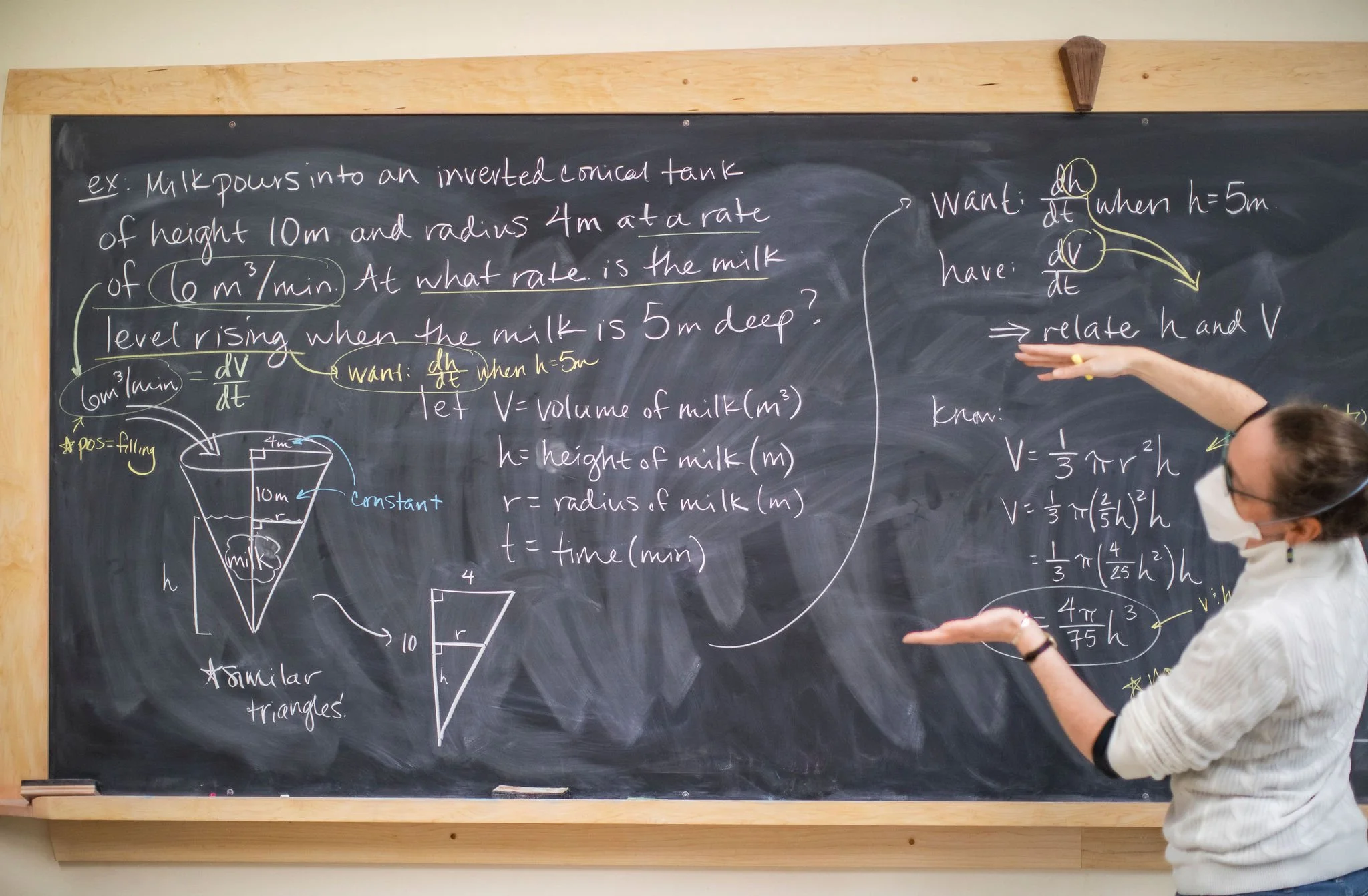
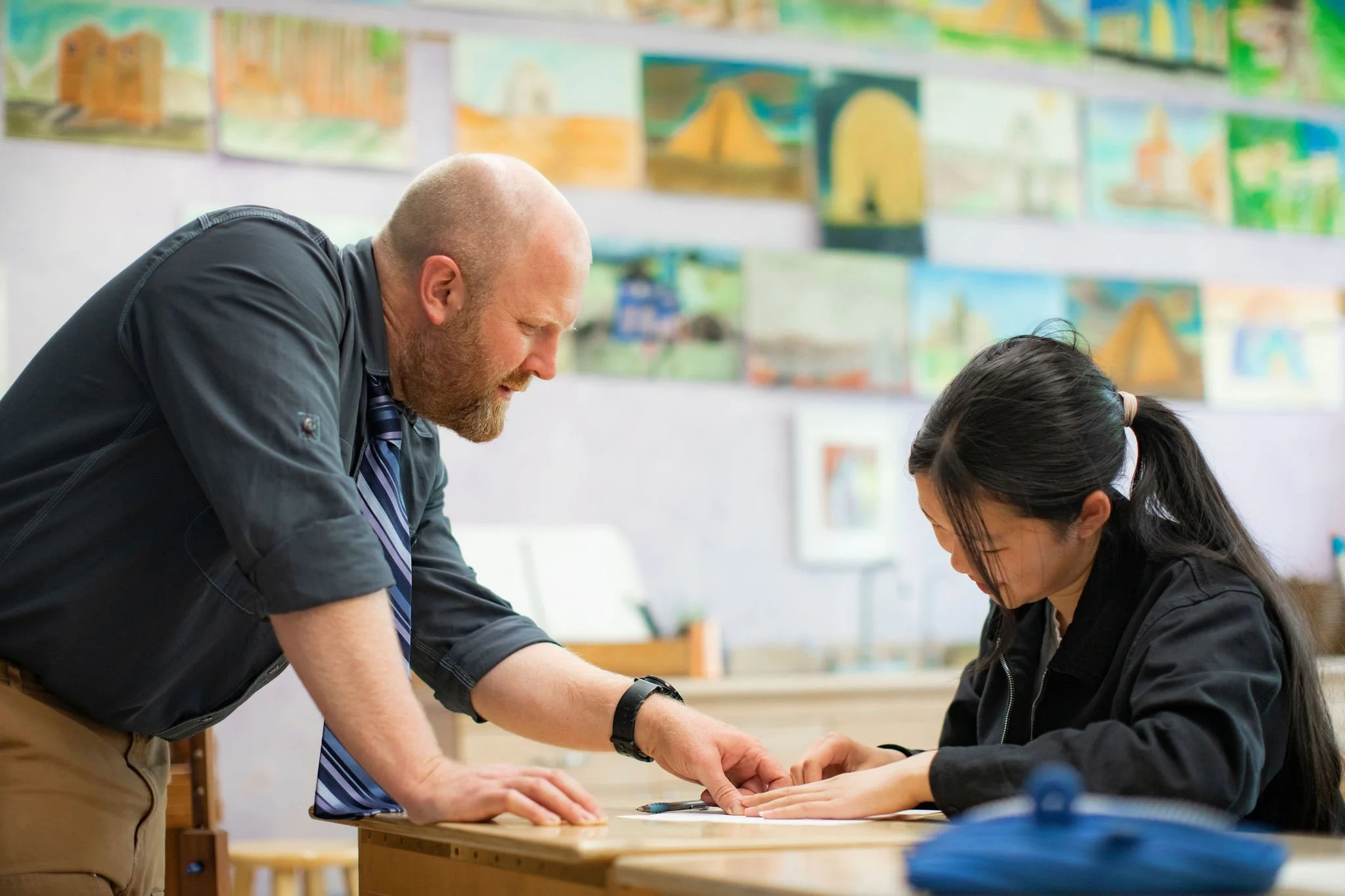
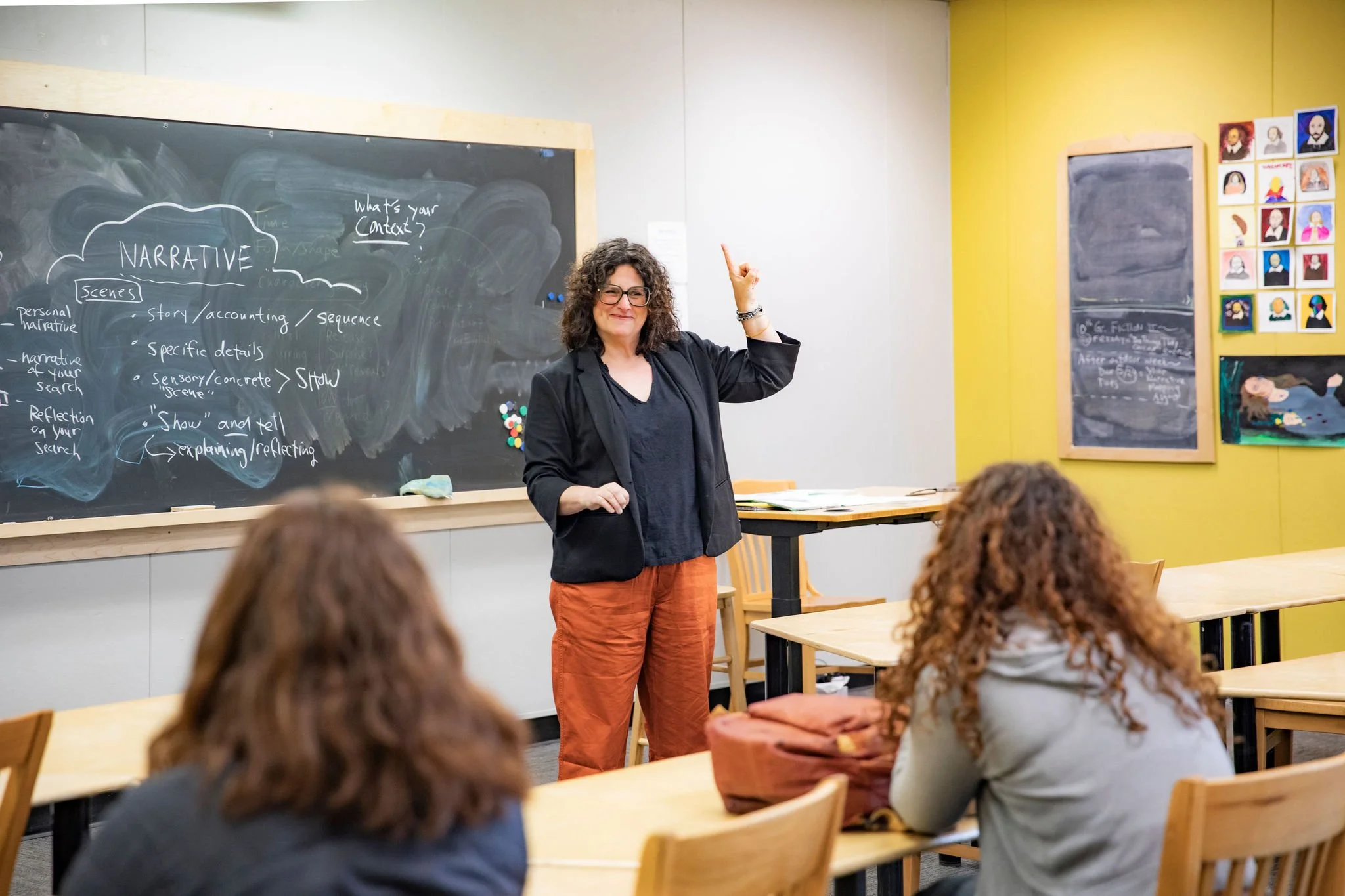
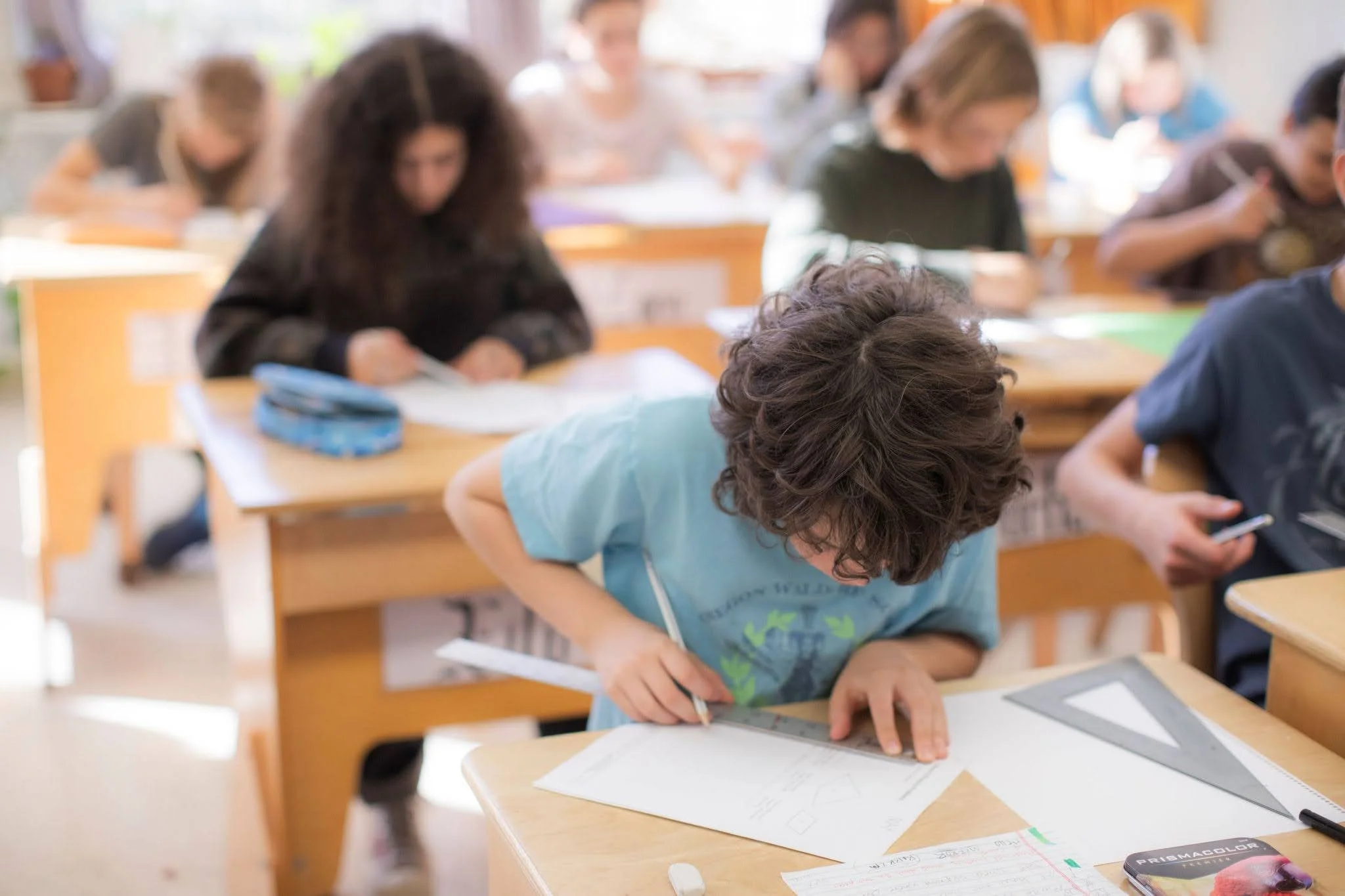
Above: Our teachers still use chalk and chalkboards to teach all the way through 12th grade. The strong student-teacher relationship here allows students to take their studies as far as they want to go. 7th graders work in a geometry class, utilizing hand written notes, tools and colored pencils to complete assignments.
At Portland Waldorf School, we offer an independent and human-centered alternative. From preschool to 12th grade, we place extraordinary value on building strong class communities and trusting bonds between teachers and students. We don’t use instructional technology in the classroom; instead, storytelling, movement, art, games, group work, hands-on projects, and lively class discussions keep students engaged with their classwork and with each other.
Research has consistently shown that strong teacher-student relationships have a positive effect on every aspect of learning, from language acquisition and reading skills to building social-emotional intelligence. We promote these relationships in many ways: through small class sizes, a low teacher-to-student ratio, and stable multi-year cohorts that give our faculty the opportunity to get to know their students individually. As a result, our teachers are able to plan lessons, manage classrooms, and measure student progress based not on standardized metrics, but on what each child is capable of achieving.

At Portland Waldorf School, we offer an independent and human-centered alternative.
Our approach is decidedly holistic, building intellectual capabilities alongside vital social-emotional skills. By learning to cooperate, to listen to and respect others, and to build trusting relationships with both adults and peers, our students grow into uniquely well-rounded human beings, prepared to thrive in an increasingly digital world.
Give your school-age child the gift of a social and screen-free education and give your teen the gift of limited, intentional screen use:
Sign up for a tour of Portland Waldorf School to learn more about our approach or visit us at our High School Open House on October 17 to see our hands-on education in action.